What Smart Lock Installation Actually Involves — Beyond Swapping a Knob
Many homeowners assume that a smart lock door knob or smart deadbolt simply screws in where the old hardware sat. In practice, the process involves more precision than that. A professional locksmith begins by measuring the cross bore diameter, the backset (the distance from the door edge to the center of the bore), and the edge bore for the latch. Most U.S. residential doors follow standard ANSI prep dimensions, but older Anderson homes — particularly those built in the 1950s through 1970s near the historic West Market Street corridor — often have non-standard backsets or thinner stile widths that require adapters or a different product selection altogether. Ignoring these measurements leads to misaligned latches, incomplete deadbolt throws, and security gaps that defeat the entire purpose of upgrading.
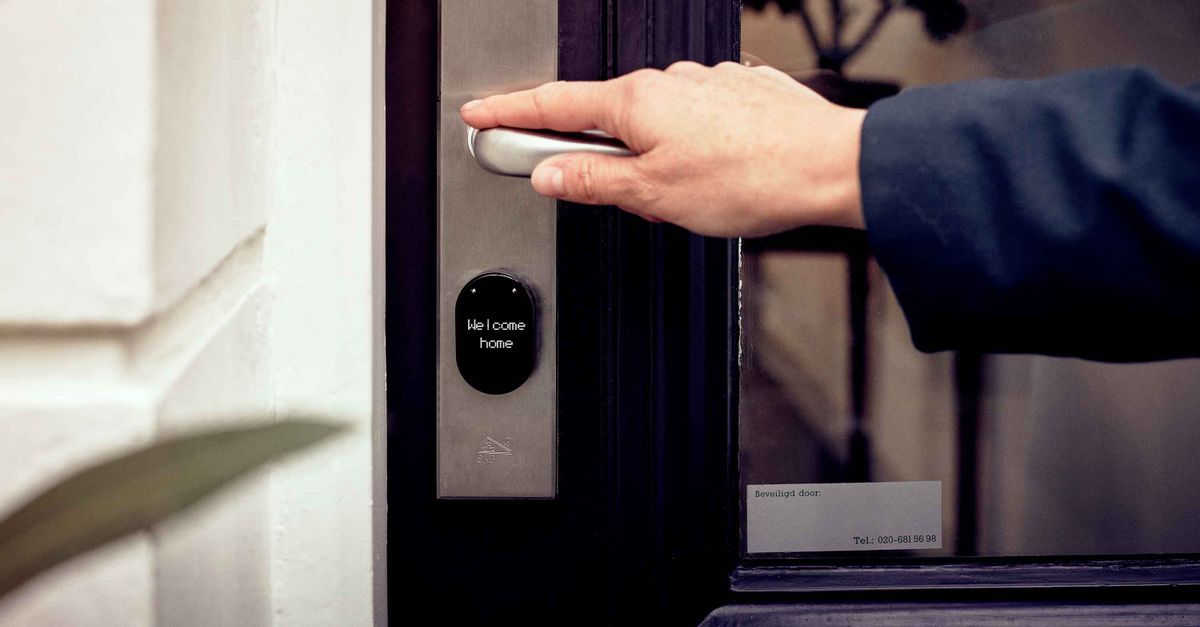
Beyond the physical fit, smart locks require a functioning Wi-Fi or Z-Wave/Zigbee signal at the door, correct battery orientation, and sometimes a hub device if you want voice-assistant integration. Our technicians test connectivity before they leave, confirm that the deadbolt throws fully into a reinforced strike plate, and verify that all user codes work from both the keypad and the paired app. We also check that the door itself closes squarely — because a warped or settling door frame will cause even a perfectly installed smart lock to misalign and fail over time. This thoroughness is what separates a professional door lock installation service from a quick retail swap.